
RECEPTION FIELD
06 · PRACTICAL MODULE
A thought packet may arrive simultaneously as knowledge, an image, an emotion, a bodily signal, context, and a direction for action. The decoder helps reveal which part was perceived information and which part was added during the person's unpacking process.
A seven-layer decoder, four-part output, local storage, and transfer to the Alien Algorithm are ready to use.
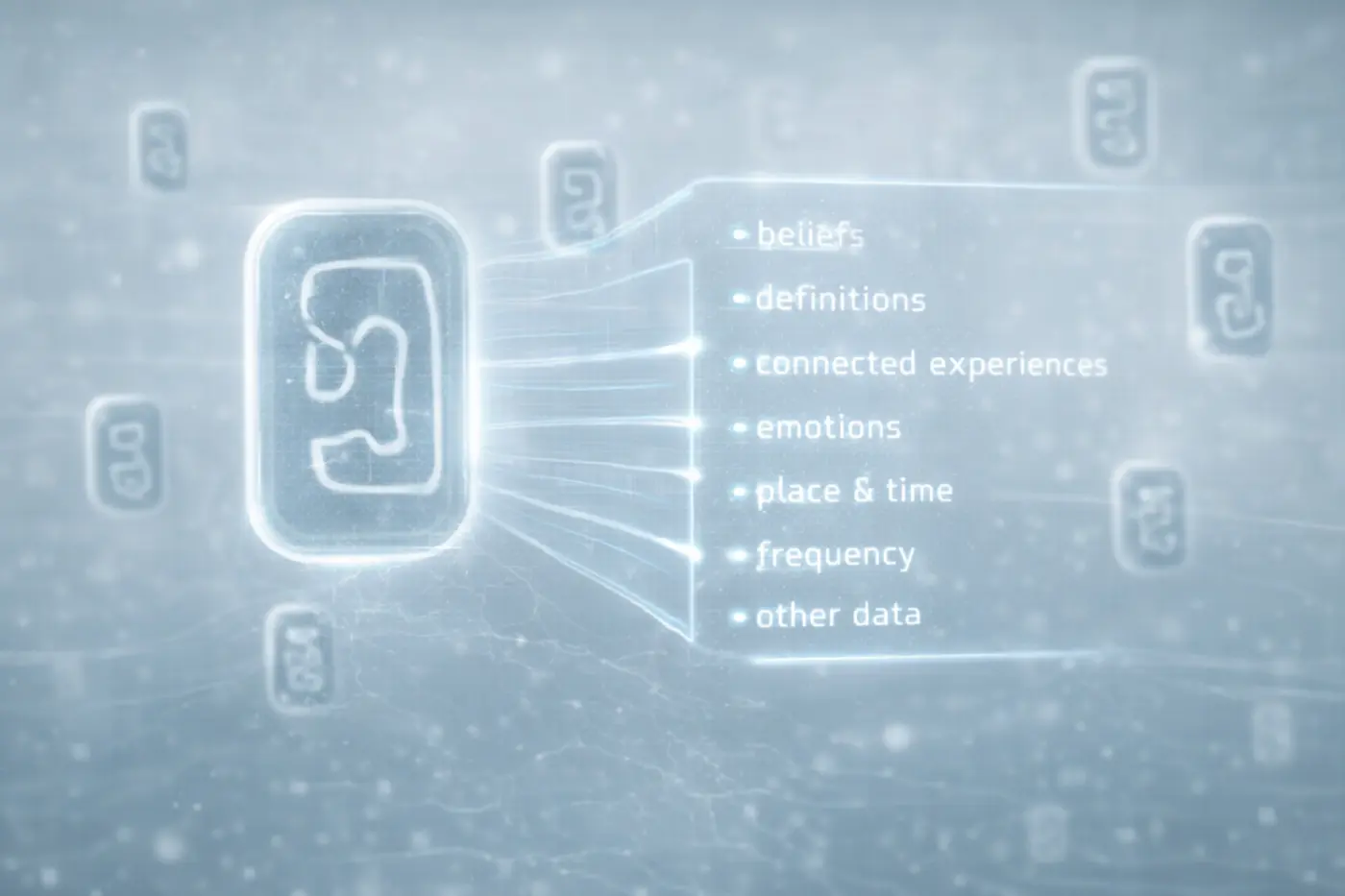
ONE EXPERIENCE · SEVEN INFORMATION LAYERS
The decoder does not decide where an experience came from. It separates perceived information, the body's response, the meaning added by the ego, and the next verifiable step.
What did you know or perceive before it became a sentence?
What did you see, in what environment did it occur, and what was spatially important?
Where in the body did the reaction begin, and what did it feel like?
What feeling arose before an explanation or story was created?
What meaning or old rule did the ego add to the experience?
What did this information appear to ask you to do, avoid, or not do yet?
What happened when you responded, did not respond, or waited?
MODULE STRUCTURE
The brain sequences the packet; the emotional body reacts; the ego fills gaps with existing beliefs. These parts must not be presented as one proven message.
Describe the core thought, image, space, and perceived direction of action before creating a complete narrative.
Keep bodily signal, emotion, and the activated ego belief separate from direct information.
State a hypothesis and one small, safe step that does not require premature proof of origin.
Connect the activated belief with one of the 14 axes and continue comparing its definition in the Alien Algorithm.