01 · WHO THEY ARE
Nature and role
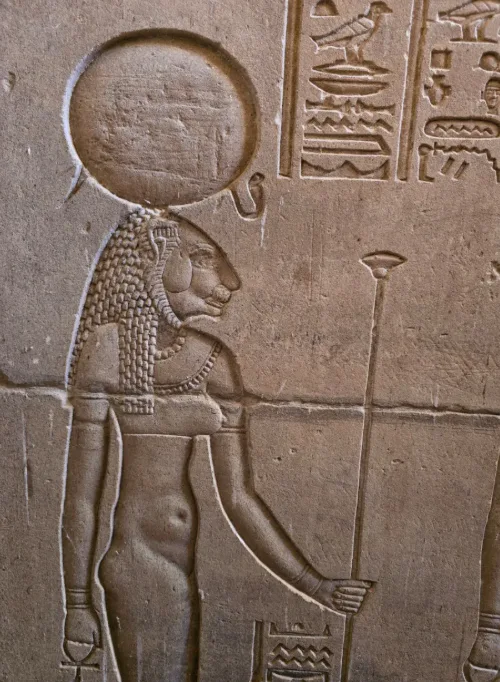
Sekhmet Lyra is an older lion-headed genetic hybrid who belongs to a different genetic lineage from the red-haired Human Lyra. The author's contact traces are associated with Sekhmet statues in Cairo, Luxor, Karnak, and the Grand Egyptian Museum.
Sekhmet Lyra is an older lion-headed genetic hybrid and an independent Lyra lineage. Her contact traces opened in Egypt through the search for Sekhmet statues and repeatedly experienced recognition.
Sekhmet Lyra is not the red-haired Human Lyra from Vega. This is a separate being with a different appearance and its own genetic lineage, whose existing images and contacts are documented separately.
02 · APPEARANCE AND DISTINCTION
In-project visual canon
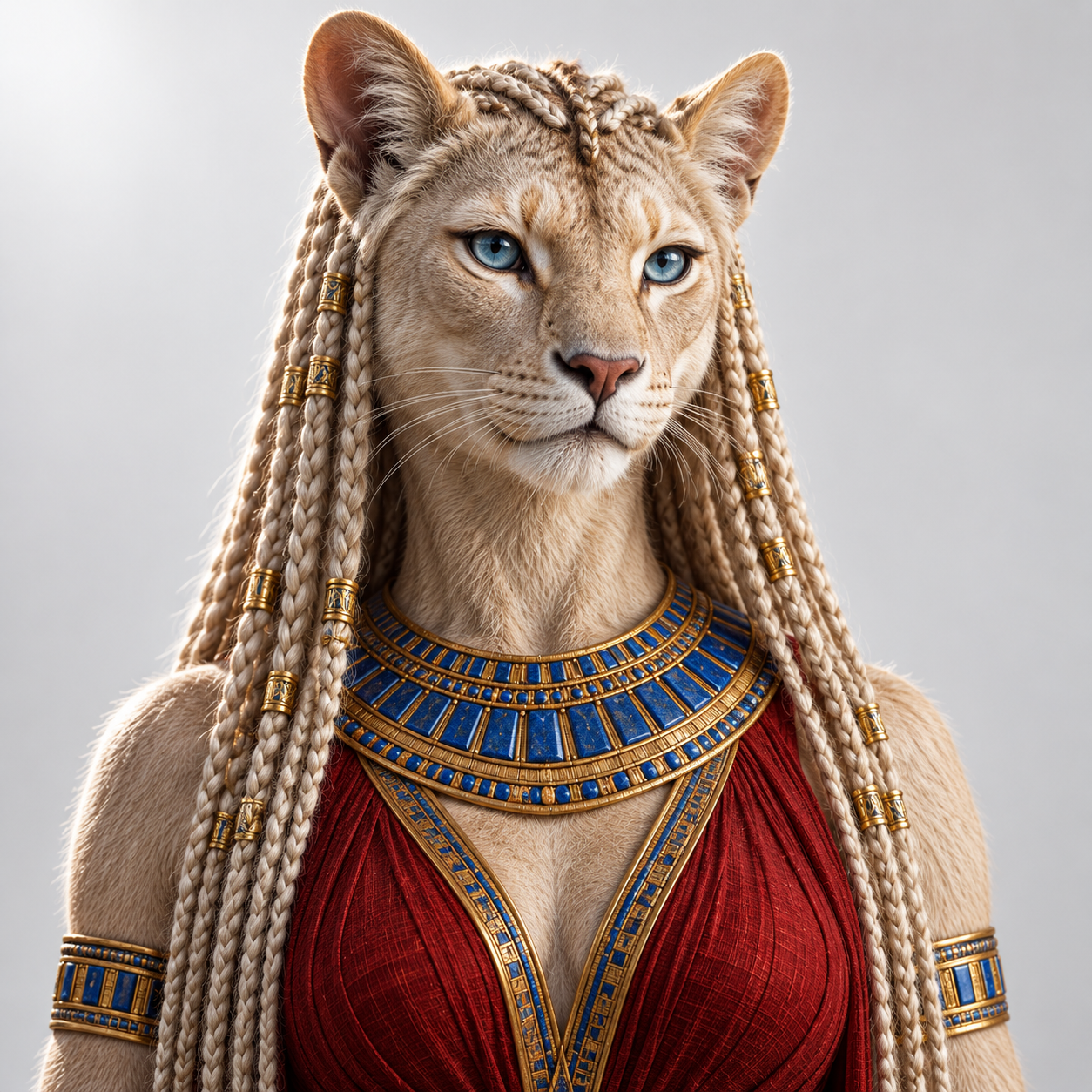
Sekhmet Lyra is a lion-headed humanoid being. The existing reconstruction image shows a strong feline face, reddish or golden mane-like hair, and a near-human body shape; this clearly differs from the human face of the red-haired Human Lyra.
03 · LIVING ENVIRONMENT
In what kind of space does this consciousness operate?
Egyptian temples and museums recur in the author's contact material: Cairo, the Grand Egyptian Museum, Luxor, and Karnak. Different vibrations experienced near Sekhmet statues helped distinguish specific locations and recognition of the being.
04 · COLLECTIVE LOGIC
How are role, individuality, and cooperation related?
Sekhmet Lyra represents an older, genetically distinct lion-headed lineage from Human Lyra. Distinguishing genetic origin is the central principle of this profile.
05 · HOW THEY COMMUNICATE
Mode of communication
Recognition, bodily sensation, the vibration experienced at the statues, and the recurring connection with Egypt, the Lyra lineage, and the presence of the lion-headed Sekhmet.
06 · WHAT CONTACT REQUIRES
The receiver's minimum readiness
Pay attention to the specific form, location, vibration, and your bodily sensation. Always keep the Sekhmet Lyra documentation separate from the red-haired Human Lyra material.
07 · CONTACT EXPERIENCE
personal experienceThree separate layers
I searched for Sekhmet statues in Egypt and encountered them at the Grand Egyptian Museum, in Luxor, and in Karnak. At several statues, I felt a distinctly positive energy and recurring recognition.
Sekhmet Lyra is an older lion-headed genetic hybrid. Although the energy signature may resemble Human Lyra's, they are neither the same race nor the same genetic lineage.
Keep Sekhmet-Lyra's and red-haired Human Lyra's contacts, portraits, and genetic lineages separate, and record the actual location and bodily sensation for each Egyptian statue.
BACKGROUND & CONNECTIONS
Sekhmet Lyra is not the red-haired Lyra in a different costume.
The lion-headed Sekhmet Lyra represents an older genetic Lyran lineage. The red-haired Human Lyra belongs to a separate hybrid lineage closer to humans.
THE ACTUAL TEACHING
A similar energetic recognition does not automatically identify the same being or species. The work begins by keeping appearance, encounter, origin, role, and later interpretation distinct while examining their relationships.
Sekhmet Lyra introduces a historical memory layer: why a particular statue, temple, or symbol can feel familiar before a complete story is available. Recognition may arise through a place, an object, or a direct sense of presence.
THE STORY AND CONTACT CONTEXT
Before traveling to Egypt, I searched for Sekhmet statues in Cairo, Luxor, and Aswan. At Karnak Temple and other locations, repeated recognition around specific statues connected the lion-headed presence with an older Lyran lineage.
Searching for Lyra in Egypt also led to the Mantis's teaching about broken objects during a pyramid encounter. This showed how one symbol or journey can reveal several different contact layers without collapsing them into a single being.